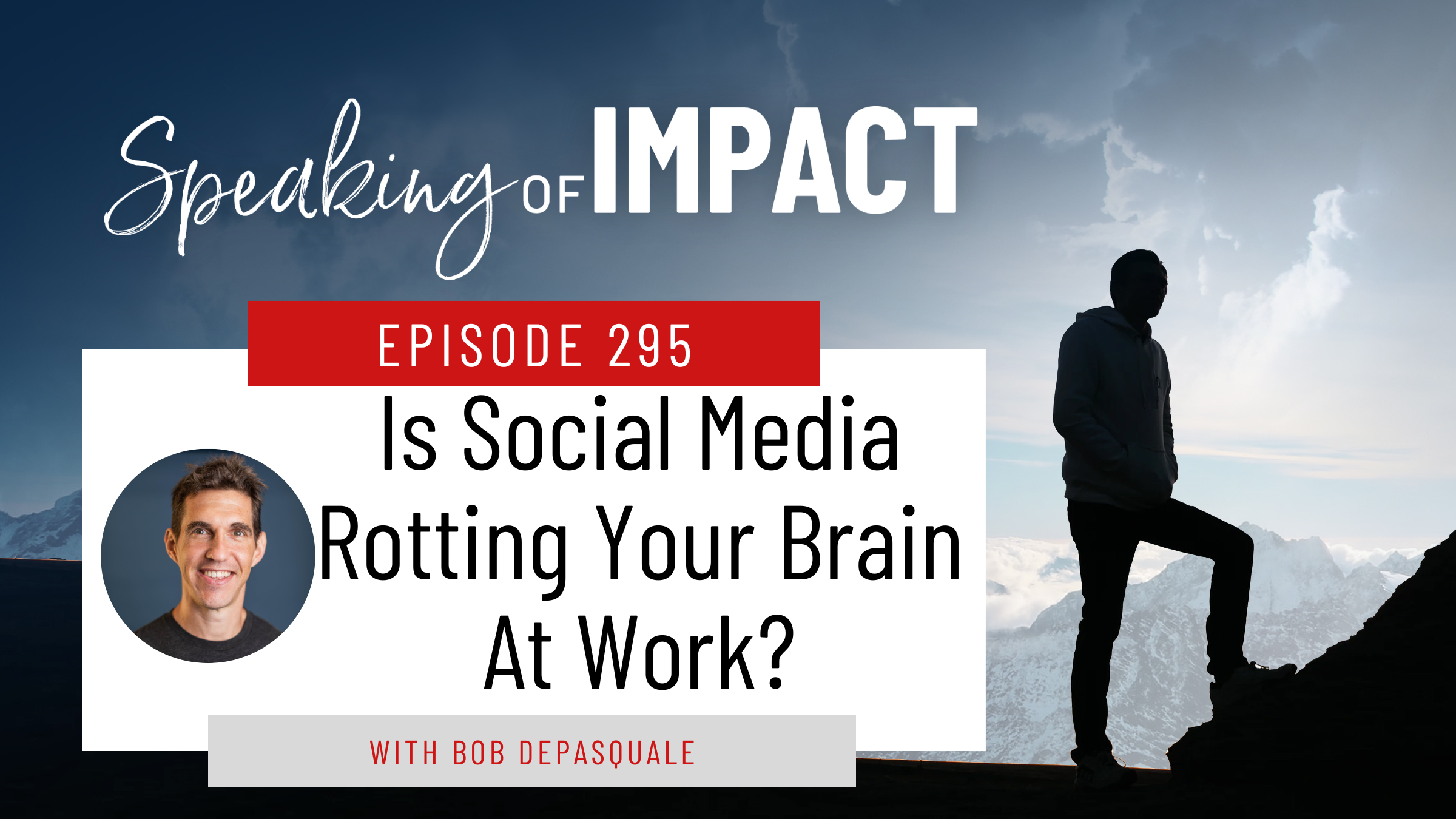
EP #295 Is Social Media Rotting Your Brain At Work?
We joke about “brain rot” all the time…
But the way we use our phones and feeds is quietly changing how we think, focus, and work. In this episode, I dig into why doom scrolling is not just a personal bad habit but a cultural and environmental problem that leaders can and should help solve.
There are five practical ways to design a more generous work environment that protects people’s attention, reduces the urge to escape into endless scrolling, and makes deep, meaningful work feel more rewarding than another hit of dopamin.
You will hear how to create real “deep work” zones, what healthy breaks actually look like, how to set team notification norms, why curating your online feeds matters for identity and purpose, and how making brain health a visible priority can transform how your team feels day to day. This is not about shaming employees for taking “brain breaks” or trying to control every minute of their day. It is about building generous cultures where people can think clearly, do work they are proud of, and go home with more energy instead of less.
*Enroll in the “Feeling Generous” Email course 📧
Have a brainy weekend.📱
What You'll Learn in Today's Episode:
Why I believe “brain rot” is less about personal weakness and more about the environment we work in, and how distractions have become something we secretly want when work feels like a grind.
How creating deep work zones with clear time blocks and fewer notifications helps people feel more productive and fulfilled instead of feeling caged or controlled.
What real, restorative breaks look like and why swapping doom scrolling for short walks, breathing, or analog spaces can leave your brain calmer and your work sharper.
How clear notification norms and quiet hours reduce anxiety, prevent “everything is urgent” culture, and show respect for people’s attention and mental health.
Why giving your team a “purpose filter” for their feeds and sharing positive digital resources can turn social media from numbing distraction into a source of learning and connection.
How making brain health and digital hygiene a visible leadership priority helps high achievers adopt healthier habits without feeling like they are losing their edge.
Quotes Worth Sharing:
“Distraction has actually become something we want, because it feels like relief when work is not designed to be meaningful and engaging.”
Bob DePasquale
“I do not want people to feel like they have to escape from their work and get a couple videos in just to survive the day.”
Bob DePasquale
“You do not fix brain rot by shaming people away from their phones. You fix it by designing generous environments that respect attention and encourage real rest.”
Bob DePasquale
“A deep work block on your calendar is not a luxury; it is a meeting with your brain.”
Bob DePasquale
“We are not trying to keep people from taking breaks. We are trying to help them take breaks that actually restore, not just overstimulate.”
Bob DePasquale
“The message you want your team to hear is, ‘We protect our brains here,’ not ‘We squeeze every ounce of attention out of you and then tell you to recover on your own time.’”
Bob DePasquale
“When you show people how to use technology in a healthier way, you are not just protecting productivity, you are protecting their joy and their long-term impact.”
Bob DePasquale
Resources from Today’s Episode:
Is doom scrolling really rotting our brains? The evidence is getting harder to ignore | The Guardian – Siân Boyle
Explores how “brain rot” has moved from an internet joke to a real concern, linking heavy doom scrolling to reduced attention, memory, and emotional well-being.
Helps frame why social media overuse is not just harmless entertainment and why we need healthier digital habits.Demystifying the New Dilemma of Brain Rot in the Digital Era: A Review – PMC
A scientific review of how excessive digital consumption can affect cognition, mood, and behavior, including mechanisms behind attention fragmentation and addictive use.
Provides evidence for why protecting focus and limiting fragmented online use matters for long-term brain health and performance.
My Book - Personal Finance in a Public World
Related Episodes: